InsightfulPM

Why Executive Portfolio Assessment should start from the top — not the bottom
Most portfolio dashboards answer project questions. Executives need answers to business questions.
Praful Pujar
7/16/20262 min read
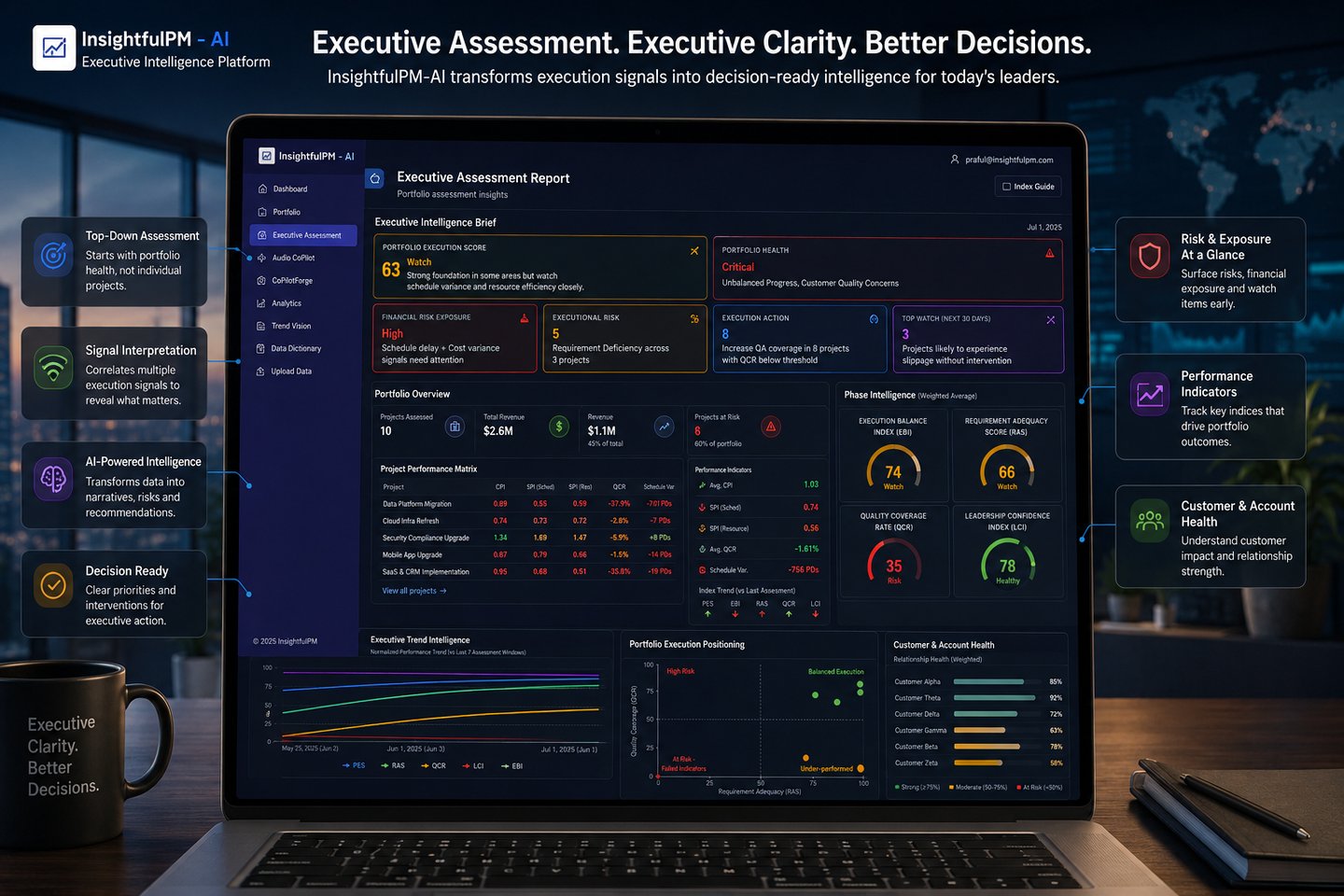
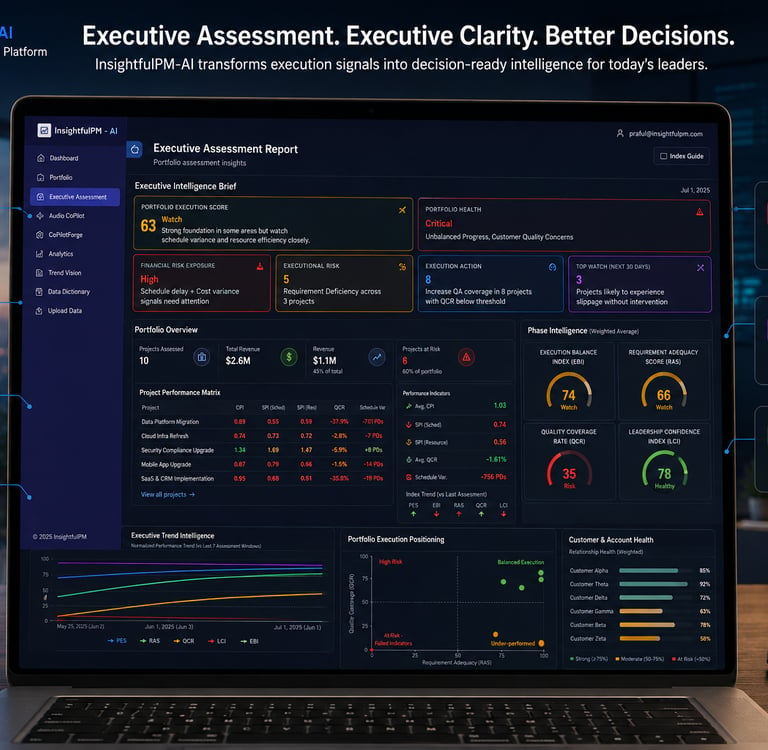
Why Executive Portfolio Assessment should start from the top — not the bottom. Most portfolio dashboards answer project questions. Executives need answers to business questions.
Most portfolio dashboards are built to answer:
Which projects are Red?
Which milestone slipped?
Which project exceeded budget?
Useful questions. Just not the ones a CxO or Leaders actually opens the report to answer.
Executives don't start their day wondering about Project #37's schedule variance. They start with the business question underneath it:
Are we likely to achieve the objectives of this portfolio?
Where is value most at risk?
Which intervention creates the biggest impact?
What should I pay attention to today?
That's a fundamentally different starting point. Most systems aggregate status upward, hoping it eventually resembles an executive answer.
InsightfulPM starts with the executive outcome and works downward instead.
1. It starts with the portfolio as a business investment—not with list of projects.
Before touching individual project data, the platform first asks:
What is the health of this portfolio as an investment?
Execution confidence
Delivery balance
Financial exposure
Overall portfolio health
Customer & Account Health
Because portfolios rarely fail one project at a time. They fail when seemingly unrelated execution signals begin reinforcing one another.
2. It interprets relationships—not individual metrics.
Schedule performance, budget variance, requirement adequacy, resource utilization, delivery quality, customer health, and financial indicators are never interpreted in isolation.
The meaning emerges from how those signals interact.
A slipping schedule means something very different when requirements are stable than when quality is deteriorating and customer confidence is declining.
That's the difference between reporting metrics and understanding the story they're telling.
3. It builds intelligence—not another dashboard.
The output isn't more charts to interpret.
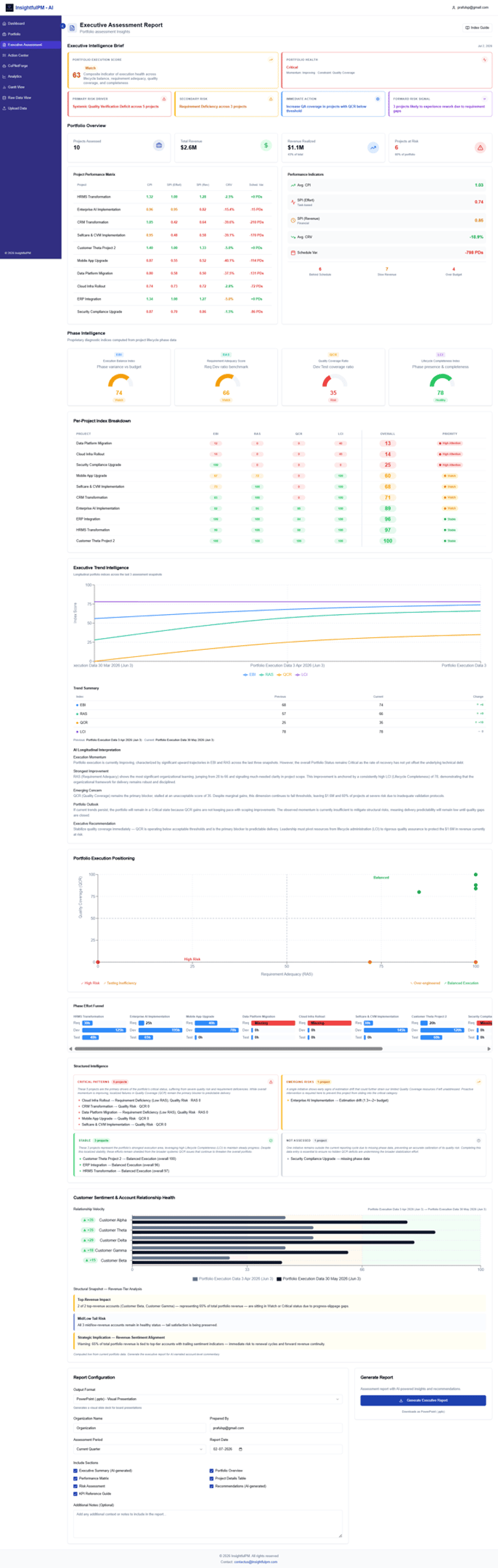
It's an Executive Brief.
Business Narrative (AI-Augmented).
Critical priorities.
Emerging risks.
Portfolio positioning.
Longitudinal Intelligence (AI-Augmented)
Intervention recommendations.
The interpretation is done before it reaches the executive—not left for them to piece together the night before the steering committee.
4. The objective is a decision—not a report.
Not:
"Here's your data."
But:
"Here's what it means."
"Here's why it's happening."
"Here's what to do next."
That's the distinction InsightfulPM keep coming back to.
"A System of Record tells you what happened. A System of Interpretation tells you what it means—and what to do about it"
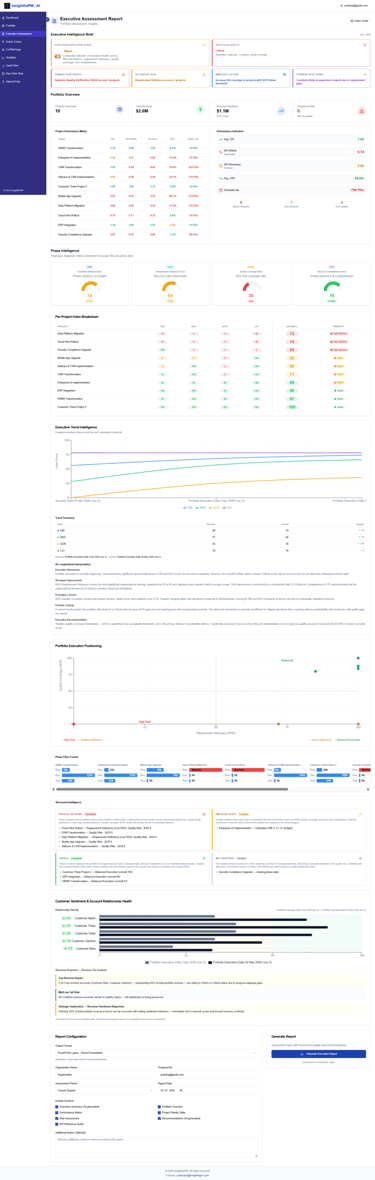
The screenshot isn't just another dashboard. It's an Executive Assessment built on the belief that leaders shouldn't have to interpret hundreds of execution signals before making a single decision.
Key Takeaways
Executive assessment should begin with business outcomes.
Execution signals gain meaning through correlation.
Dashboards should produce decisions, not just reports.
Executive Intelligence starts where Systems of Record stop.
The goal isn't better reporting. It's better executive decisions. I'm curious to hear from portfolio leaders and executives:
Do you spend more time finding the signal—or deciding what to do about it?
Continue Exploring Executive Intelligence
Executive Portfolio Intelligence
Learn how InsightfulPM continuously interprets execution signals into executive decisions.